Thai motorcycle license test: the four exercises and how to pass them
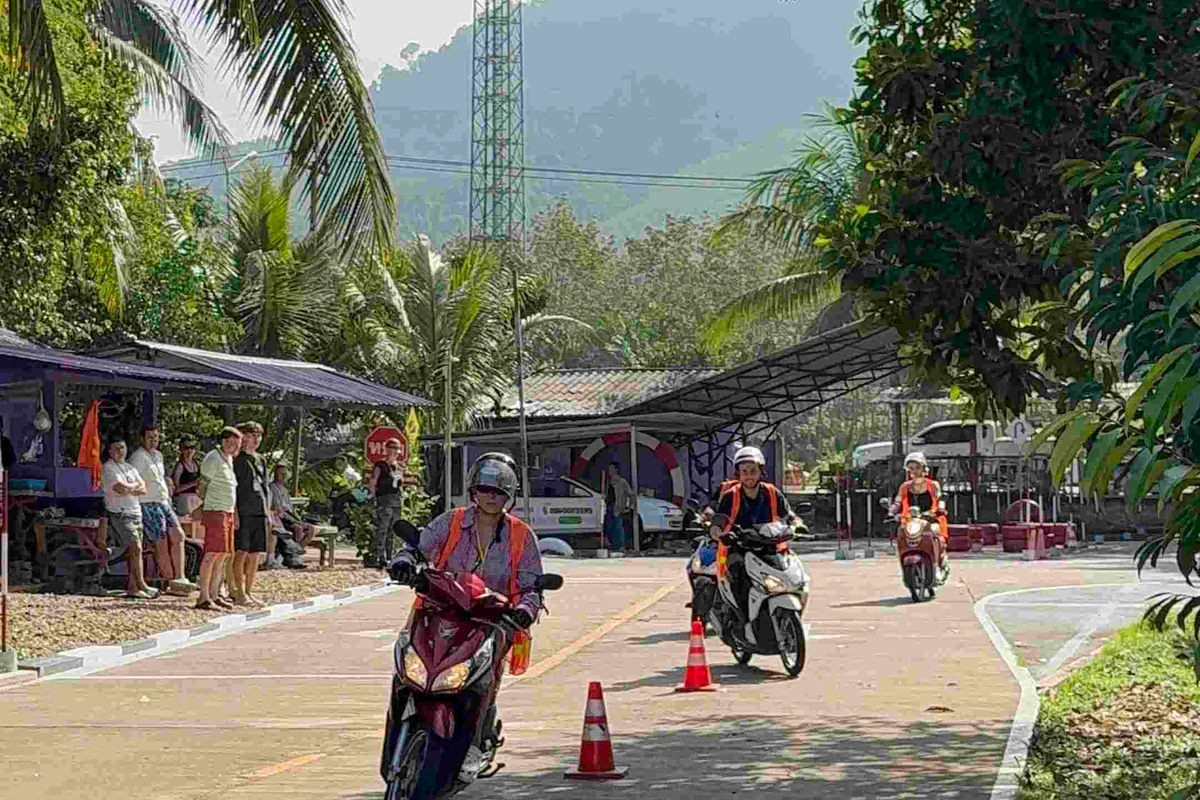
The riding test for a category A (motorcycle) license has four parts: braking, a short route, a narrow beam and a set of speed bumps. The hardest part is the narrow beam, where you can’t put a foot down.
3 min read
On this page
1. Braking
You ride in a straight line at 30 km/h (about 19 mph) up to a row of cones. Then you stop using both brakes so that your front wheel doesn't cross the second row. The distance is short, and riders who use only the rear brake often end up past the line.
2. The route
You ride the practice route again while the examiner watches your riding: how you approach and stop at junctions, whether you follow the signs, and how you enter a roundabout. In Thailand, you yield to traffic already in the roundabout on your right, and you keep left. The other rules that differ from home are in Thailand's traffic rules.
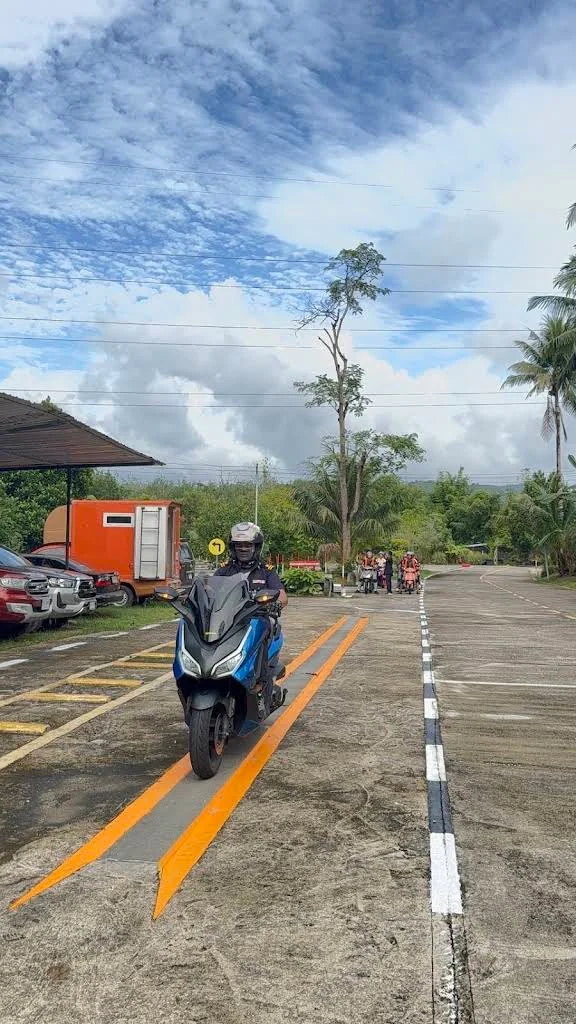
3. The narrow beam
It's a narrow metal platform only slightly wider than your tire. You have to ride along it without touching the ground and stay balanced for 10 seconds.
At low speed, what keeps the bike steady is smooth, even throttle and your eyes on the far end of the beam. Look down at your front wheel and you'll start steering, then roll off the side.
4. Speed bumps
The final exercise is a series of bumps laid at different angles. Simple on paper: ride over all of them without losing control of the handlebars.
How to prepare
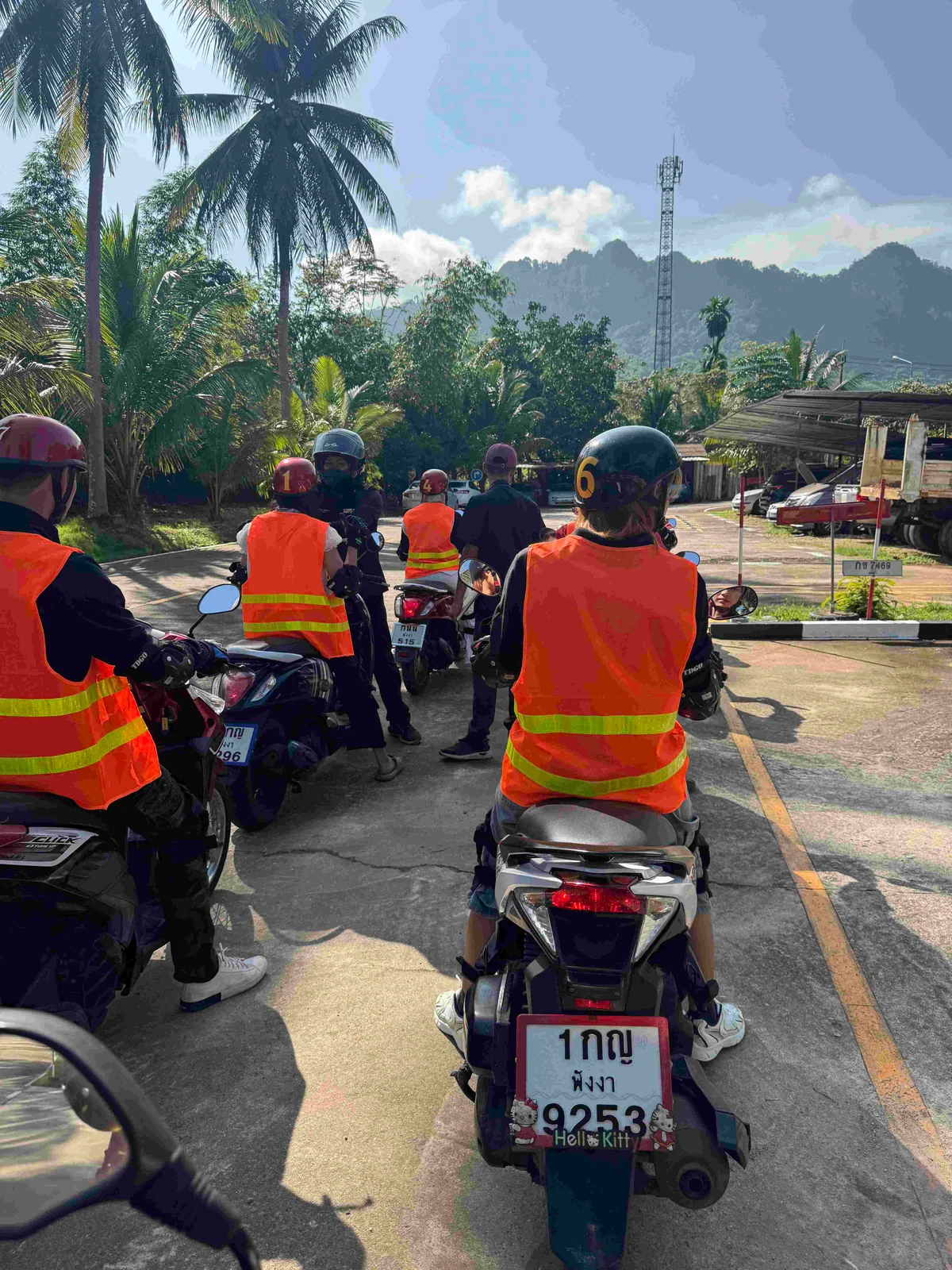
All four exercises test the same thing: confident riding at low speed. Two or three evenings in an empty parking lot are enough to practice slow, straight riding and stopping from 30 km/h with both brakes. Beginner drills are in our guide on learning to ride a scooter from scratch.
If you've never ridden before, we offer riding lessons before the test. Message us on WhatsApp.
After the test
Category A covers mopeds, scooters and full-size motorcycles. Their speed limits are lower than for cars: 60 km/h (37 mph) in town, 70 km/h (43 mph) outside town and 80 km/h (50 mph) on divided roads. Bikes of 400 cc and up follow the car limits; the full table is in Thailand's traffic rules.
Helmets are required for both rider and passenger. Riding without one can cost up to 2,000 ฿. How to get the license itself and what it costs is in the guide to the motorcycle license in Phuket.
Price, documents and the schedule are on the category A license in Thailand page. Beginners will find a Thai license with no driving experience useful.
Price, documents and steps for a motorcycle license in Phuket are on a separate page.
Sources
- Thailand Starter Kit: Motorcycle License in Thailand: Documents, Tests, Fees & Renewal
- Motorist Thailand: The 6 Most Ignored Traffic Rules in Thailand
- OpenExamPrep: Legal Speed Limits & Speed Management
- paultan.org: Thailand police focus on 10 major traffic offences linked to road accidents, increased fines