Left-hand traffic in Thailand: how to adjust on your first day
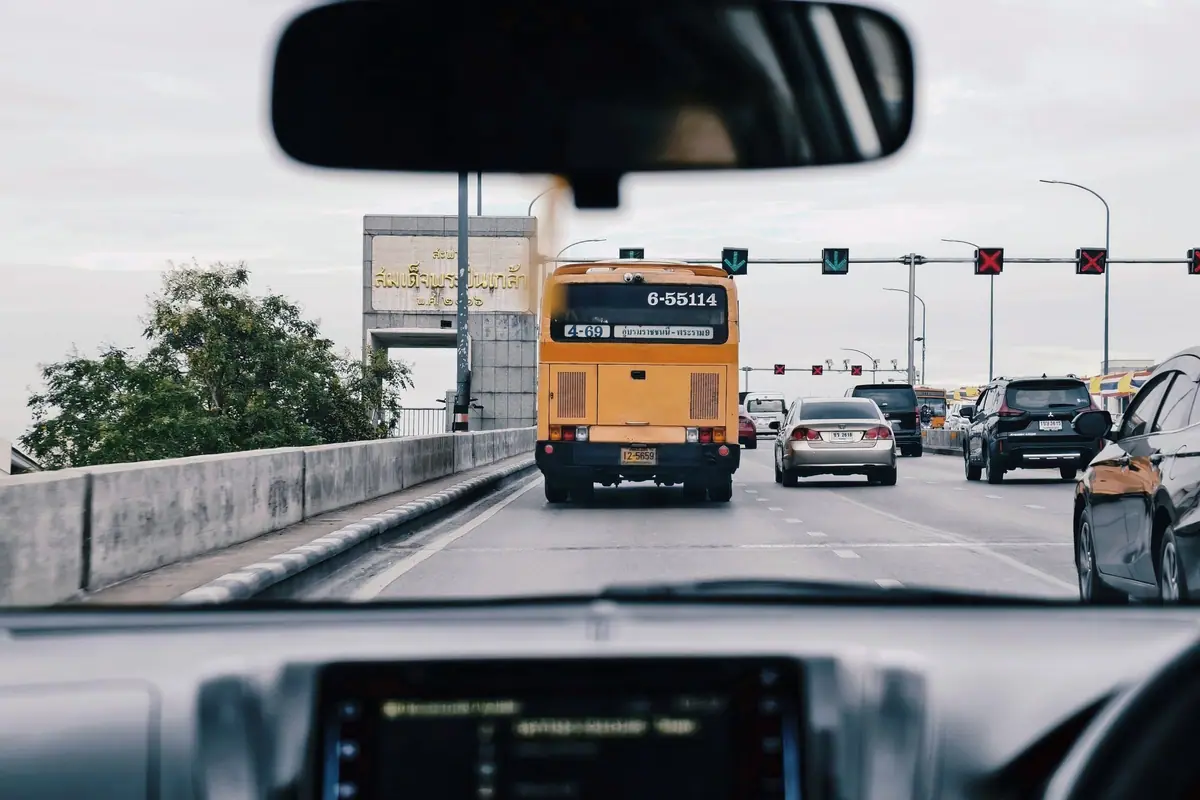
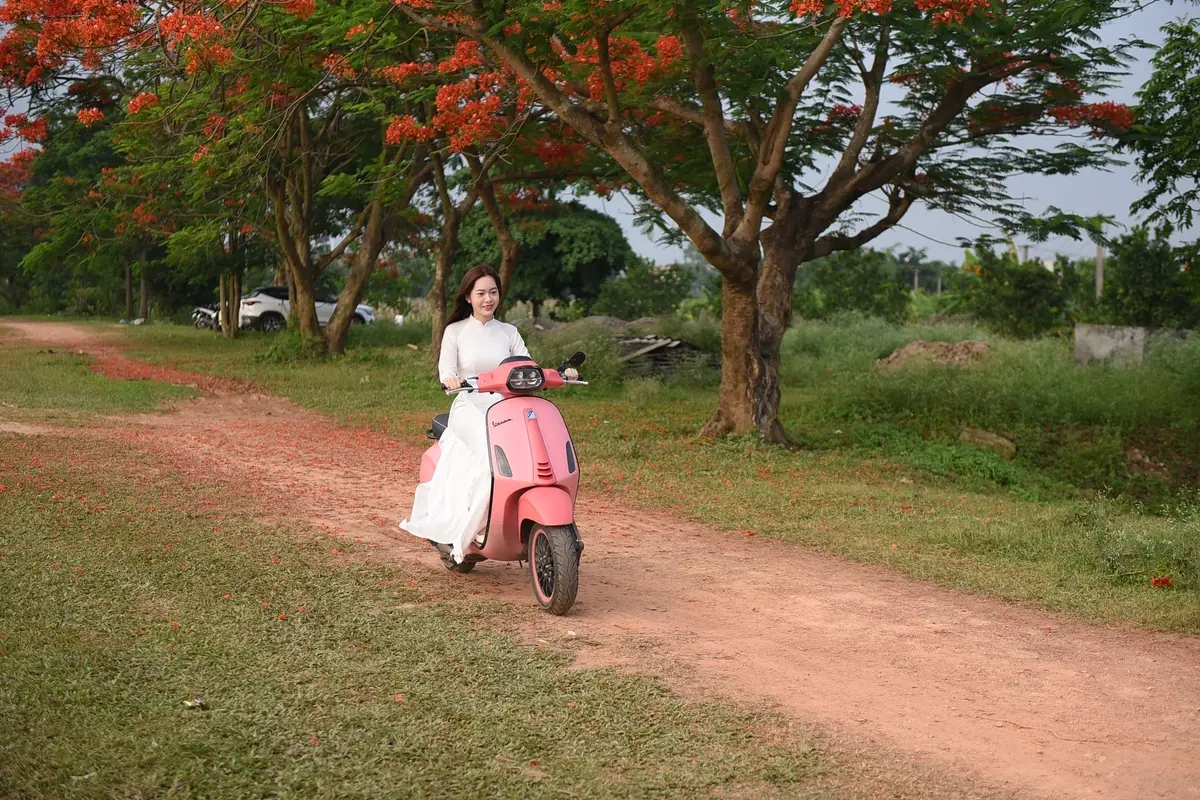
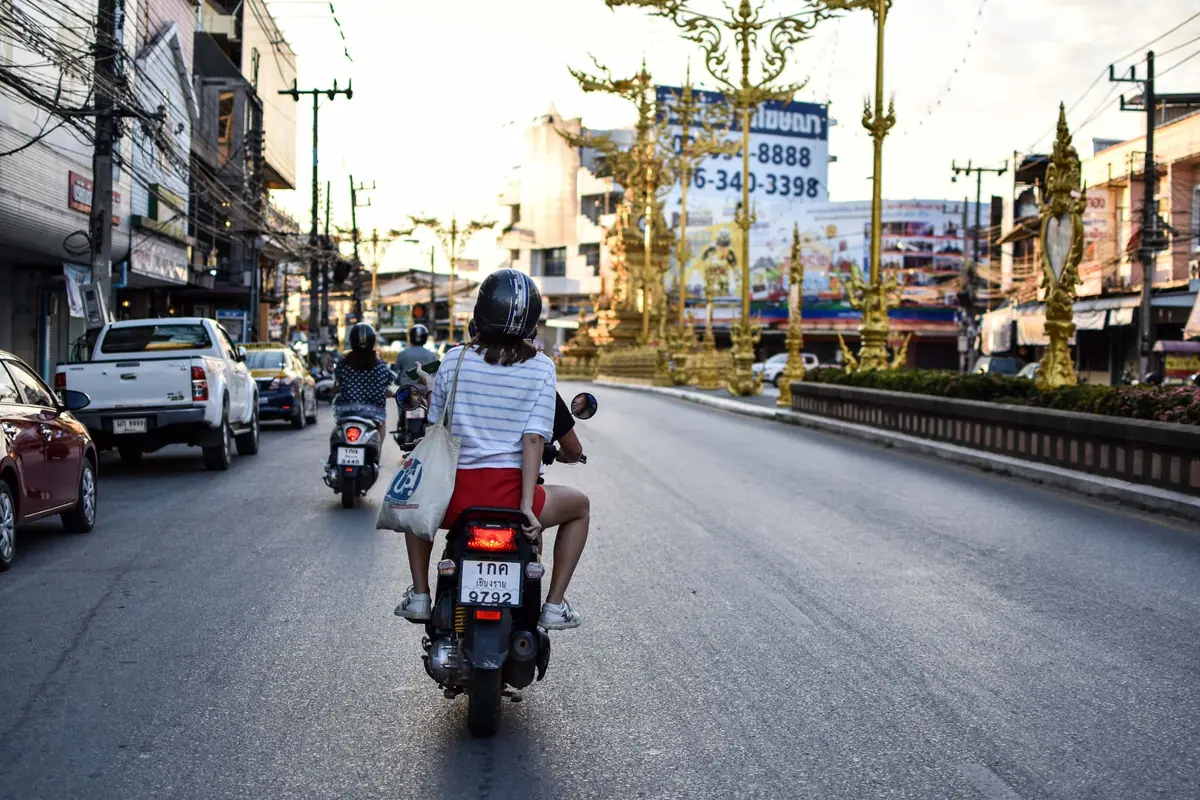
Thailand drives on the left. Cars and bikes keep to the left side of the road, cars have the steering wheel on the right, and you overtake on the right. For anyone from a right-hand country this is the main surprise of the first days in Phuket. The good news: the brain adapts quickly if you know where the traps are from the start.
5 min read
On this page
Which side Thailand drives on: the short version
| What | In Thailand | In right-hand countries |
|---|---|---|
| Side of the road | left | right |
| Steering wheel | right | left |
| Overtaking | on the right | on the left |
| Roundabouts | clockwise | anticlockwise |
| Turn across traffic | right | left |
| Turn without crossing traffic | left (on red only where a blue sign allows) | right |
Bikes, scooters and mopeds follow the same rules as cars. There is no separate "bike side" of the road. If you drive at home in the UK, India, Australia or Japan, you already know the side - the rest of this guide still covers Thai habits worth knowing.
Why Thailand drives on the left
Thailand was never a colony, but in the late 19th century Siam borrowed many British standards. The first railways and roads followed British models, and Thailand's neighbours to the south and west, Malaya and Burma, drove on the left. The left side stuck. Burma (now Myanmar) switched to the right in 1970, while Thailand, Malaysia, Singapore and Indonesia still drive on the left.
Five places where newcomers go wrong
1. Pulling out of a car park or gas station. On an empty road your hands steer the bike to the right on their own. This is the most common beginner mistake, especially in the morning. Before every departure, say to yourself: "keep left".
2. Turning right. A right turn in Thailand crosses oncoming traffic. Give way to oncoming vehicles and enter the left lane of the new road, not the right one.
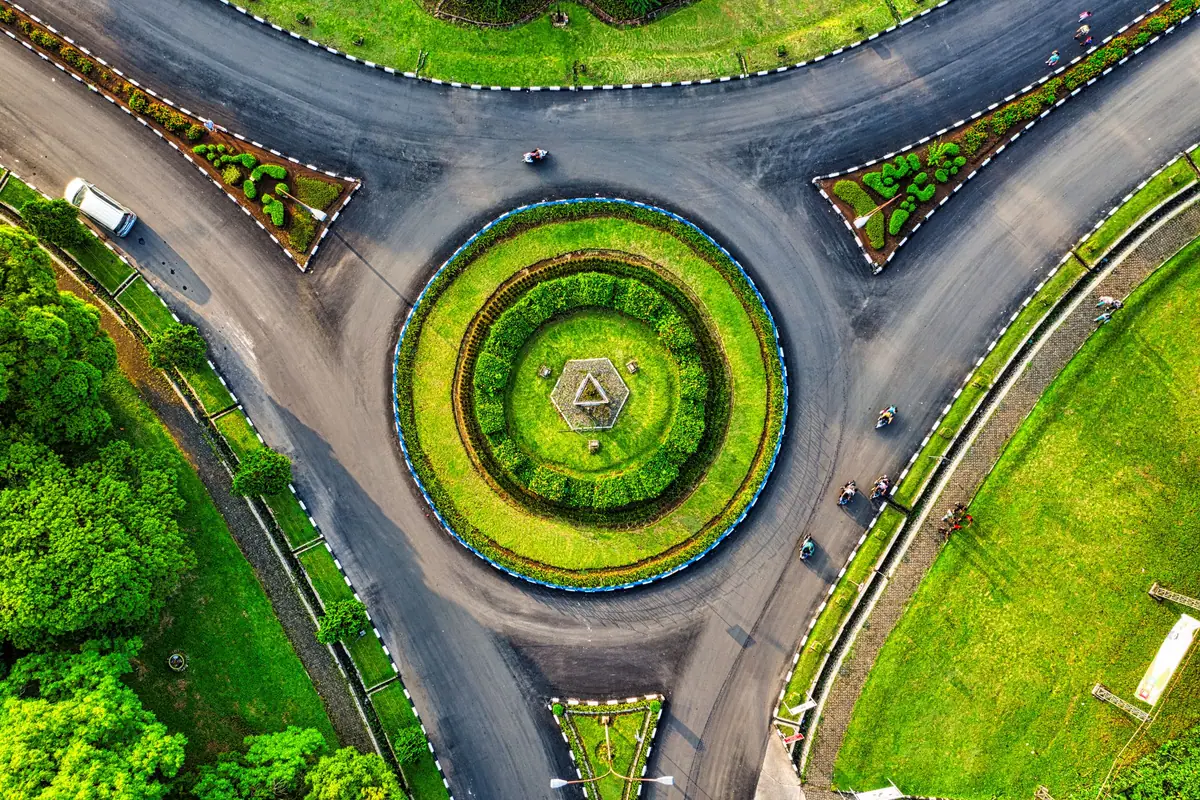
3. Roundabouts. Phuket has many: Chalong Circle, the Heroines Monument circle in Thalang, the junctions around Phuket Town. Traffic goes clockwise, and you give way to vehicles already on the roundabout, coming from your right.
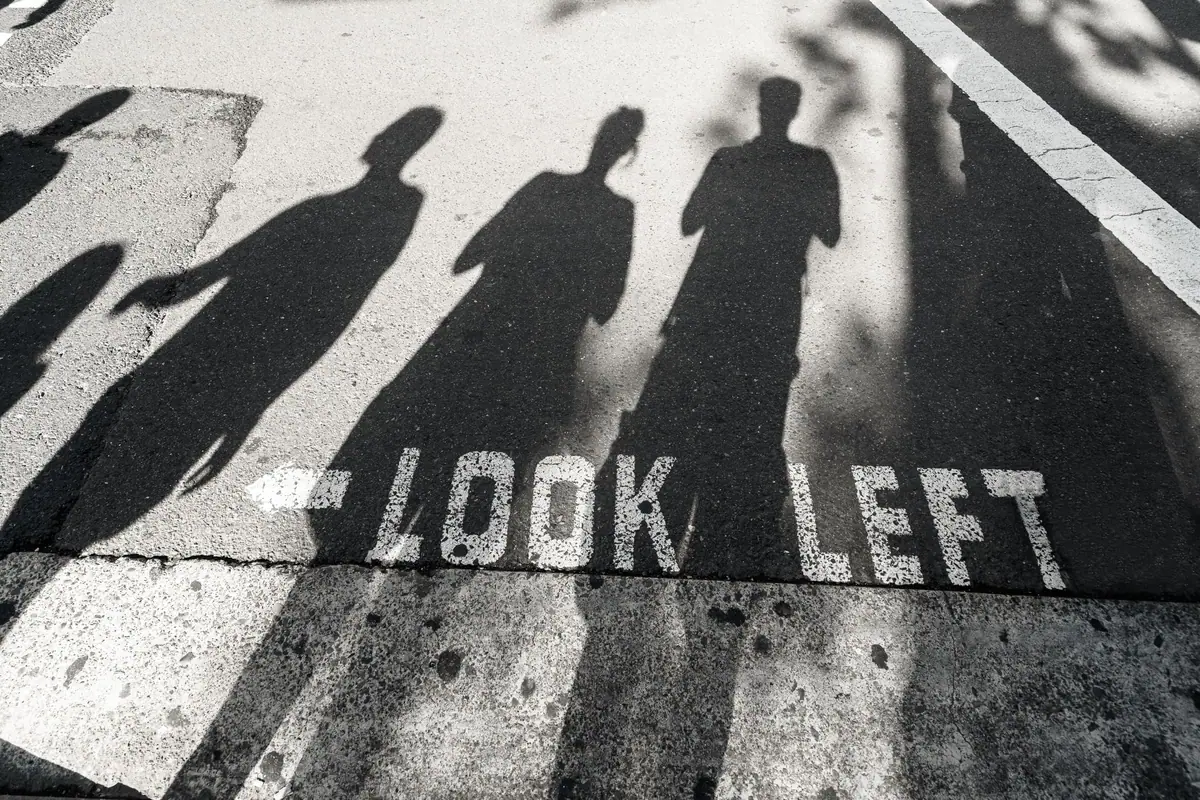
4. Looking before you cross. As a pedestrian, look right first, not left. Even experienced drivers forget this after parking a bike and walking to a cafe.
5. U-turns. On Phuket's four-lane roads, U-turns are separate pockets on the right. Move into the right lane well in advance and signal.
How to get used to left-hand traffic in a day
We give our clients a simple routine, and it works:
- First hour: an empty street. In the morning there is little traffic in Rawai, Nai Harn or Mai Khao. Five or six laps of a block with turns both ways build the habit better than any theory.
- The "wheel to the kerb" rule. In a car the driver sits closer to the centre of the road and the kerb stays on the left. If the kerb is on your left, you are on the right side.
- Don't chase the traffic. Local drivers overtake on both sides and use the shoulder. Stay in the left lane at your own speed and let them pass.
- No night riding in the first days. Darkness, rain and unfamiliar road markings add up to too many new signals.
- Start on a training lot. If you have never ridden, begin with a lesson on a closed lot. How that works is in our guide learning to ride a scooter from zero.
Road traffic in Thailand: what else to expect
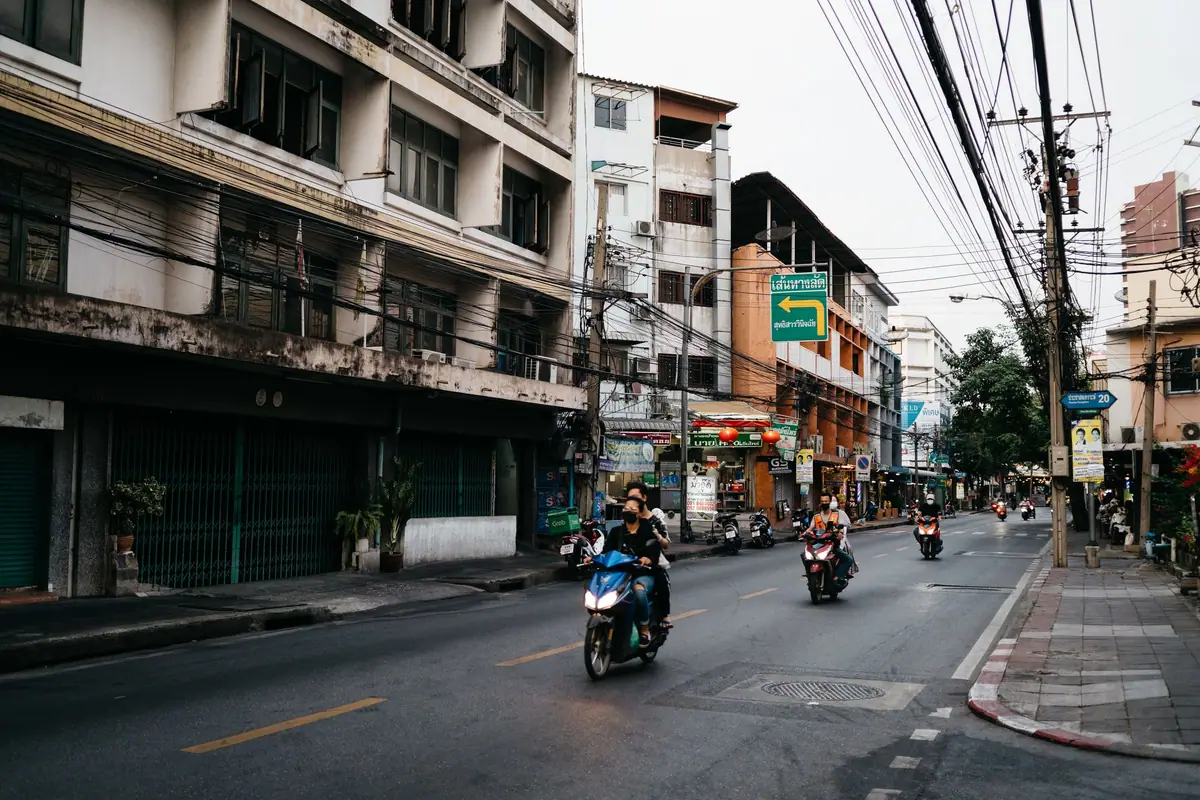
The left side is not the only difference. There are more bikes than cars on Thai roads, and they ride in a dense swarm along the left edge. The speed limit for bikes under 400 cc is lower than for cars: 60 km/h in town instead of 80. A helmet is compulsory for rider and passenger, with a fine of up to 2,000 ฿. The full list of differences is in our guide to Thailand's traffic rules.
Which license you need to drive in Thailand
You can get used to the left side in a day. Riding without the right papers is another matter: Phuket police check licenses at checkpoints in Patong, Karon and Kata almost every day in high season.
A bike needs category A, a car needs category B. One of these works:
- your national license plus an International Driving Permit with the right category. What the IDP covers and when it falls short is in our guide the International Driving Permit in Thailand;
- a Thai license. You can get one in Phuket in 6 days, even on a tourist stamp.
Not sure which applies to you? Read do I need a license in Thailand. If your license qualifies, converting a foreign license takes one visit and no exam; Russian license holders need no IDP for it. Details are in converting a foreign license to a Thai one.
A Thai motorcycle license in 6 days with Phuket License
We arrange a category A Thai license end to end:
- 10,000 ฿ - the final price, nothing added;
- 6 days, 4 visits: registration on Wednesday, fingerprints on Thursday, the exam on Saturday, the license on Tuesday;
- transport on the full days and lunch on exam day included;
- a tourist visa or visa-exempt stamp is fine, no riding experience needed;
- cash at the driving school after you have seen everything yourself. No prepayment.
No client of ours has left without a license yet. Message us on WhatsApp and we'll put you in the next group. Details are on the motorcycle license in Phuket page; for a car, see car driving license in Phuket.
Summary
- Thailand drives on the left: keep to the left edge, overtake on the right, go clockwise on roundabouts.
- The riskiest moments are pulling out onto an empty road and turning right across traffic.
- One or two days are enough to adjust if you start on quiet streets in Rawai or Nai Harn.
- A bike needs category A, a car category B: a national license with an IDP, or a Thai license.
You'll get used to the road on your own; the license is our part: category A in 6 days for 10,000 ฿. Write to us on WhatsApp.
Prices, documents and the weekly schedule for a Thai driving license in Phuket are on our main page.